Choose the Right OWC Method
Both machines process segregated organic waste through aerobic composting. The selection depends on whether your site needs assisted heating for faster moisture reduction or a non-heating biological process with aeration and curing.
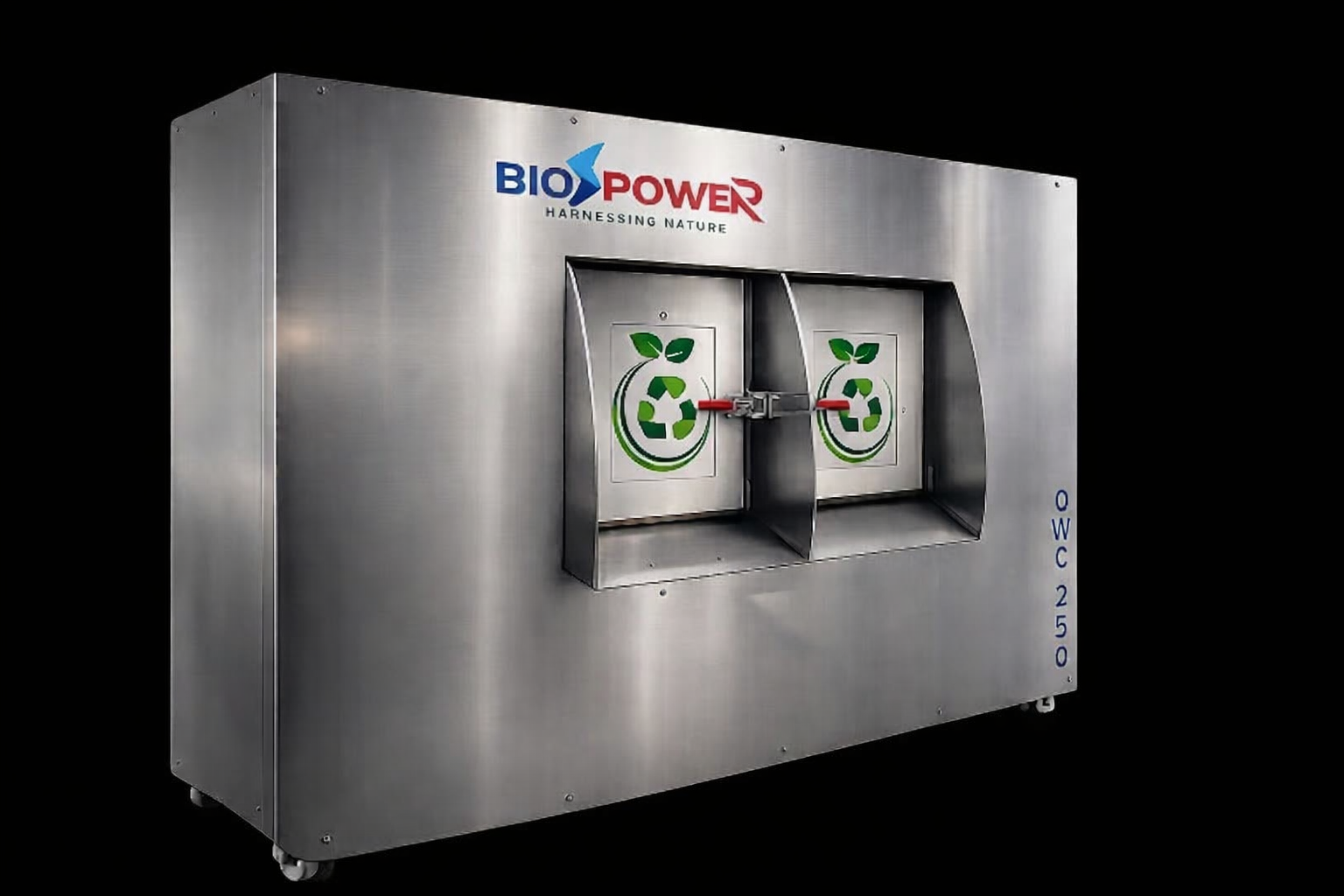
OWC — Heating Method
The heating-method OWC uses controlled mechanical mixing along with assisted heat to support temperature control, moisture reduction, and faster pre-processing of wet organic waste. It is useful where incoming food waste has high moisture, odour needs to be controlled quickly, or the site requires a more predictable daily processing cycle.
Best For
Hotels, commercial kitchens, canteens, apartments, institutions, and sites where daily wet waste is high in moisture and faster handling is preferred.
Key Features
- ✓ Assisted heating to support drying and process temperature
- ✓ Mechanical mixing for uniform contact between waste, oxygen, and microbes
- ✓ Useful for high-moisture food waste streams
- ✓ Helps reduce wetness, odour risk, and handling difficulty at the source
Advantages
- ✓ Faster moisture reduction compared with purely biological operation
- ✓ More predictable processing in humid or rainy conditions
- ✓ Suitable where curing area is limited but regular output handling is required
- ✓ Better fit for sites needing quick daily volume reduction

OWC — Non-Heating Method
The non-heating-method OWC relies on aerobic microbial activity, mixing, aeration, moisture balance, and bulking material. Heat is generated naturally by the biological process, and the material is then cured until it becomes stable compost suitable for landscaping or soil application.
Best For
Apartments, campuses, gardens, institutions, and facilities that can provide proper segregation, bulking material, operator attention, and curing space.
Key Features
- ✓ Non-heating aerobic composting process
- ✓ Uses microbial activity, oxygen, and moisture balance for decomposition
- ✓ Requires bulking material such as dry leaves, sawdust, or compost culture as per site practice
- ✓ Output requires planned curing for final stabilization
Advantages
- ✓ Lower power requirement because no heating element is used
- ✓ More natural biological composting pathway
- ✓ Lower operating cost where space and curing time are available
- ✓ Good option for sites focused on simple, steady, decentralized composting